What it is
A French drain is a trench lined with filter fabric, filled with washed gravel and fitted with a perforated pipe. Water in saturated soil moves into the gravel, enters the pipe and flows downhill to an outlet such as a pop-up emitter, a ditch, a curb outlet where allowed, or a sump.
French drains are built for water that soaks the ground and stays there. They are not the best tool for a fast sheet of surface water. That usually calls for surface inlets, grading or a swale, sometimes combined with a French drain.
When it is a good fit
- The lawn stays soggy for days after rain, even when no water is visible on top
- Water seeps along a slope or the base of a retaining wall
- Groundwater or saturated soil near a foundation or under a patio edge
- A long, low strip of yard that never dries out
When something else may work better
- Fast surface runoff from a roof or driveway (catch basins, channel drains or downspout drainage collect it better)
- Sites with no usable outlet lower than the drain
- Water caused by an irrigation leak or overspray, which should be fixed first
How it is usually installed
- Locate utilities (call 811) and confirm a legal outlet lower than the trench
- Excavate a trench that slopes steadily toward the outlet
- Line the trench with filter fabric and add a gravel bed
- Lay perforated pipe, add cleanouts where practical, and cover with gravel
- Wrap the fabric over the top, then restore soil and sod or leave decorative rock
- Test with water before closing up and confirm it reaches the outlet
Every property is different. A drainage professional confirms the design onsite. Call 811 before any digging.
What a drainage professional checks first
- Where the water actually comes from (roof, neighbor, irrigation or groundwater)
- Available fall from the wet area to the outlet
- Soil type, since heavy clay drains slowly and affects trench design
- Utilities, tree roots, fences and hardscape in the path
- Whether the outlet will be allowed by the city, county, HOA or a drainage district
Maintenance
- Keep the outlet clear of mulch, grass and debris
- Flush cleanouts if flow slows
- Watch for wet spots returning, which can mean silt has clogged the fabric or the pipe has settled
What affects the cost
Pricing pending verification
Drainage.net does not publish prices until they have been checked against sourced data. See what drives the cost of french drains, or request an onsite evaluation for a real quote.
Problems this can help with
Example drainage photos
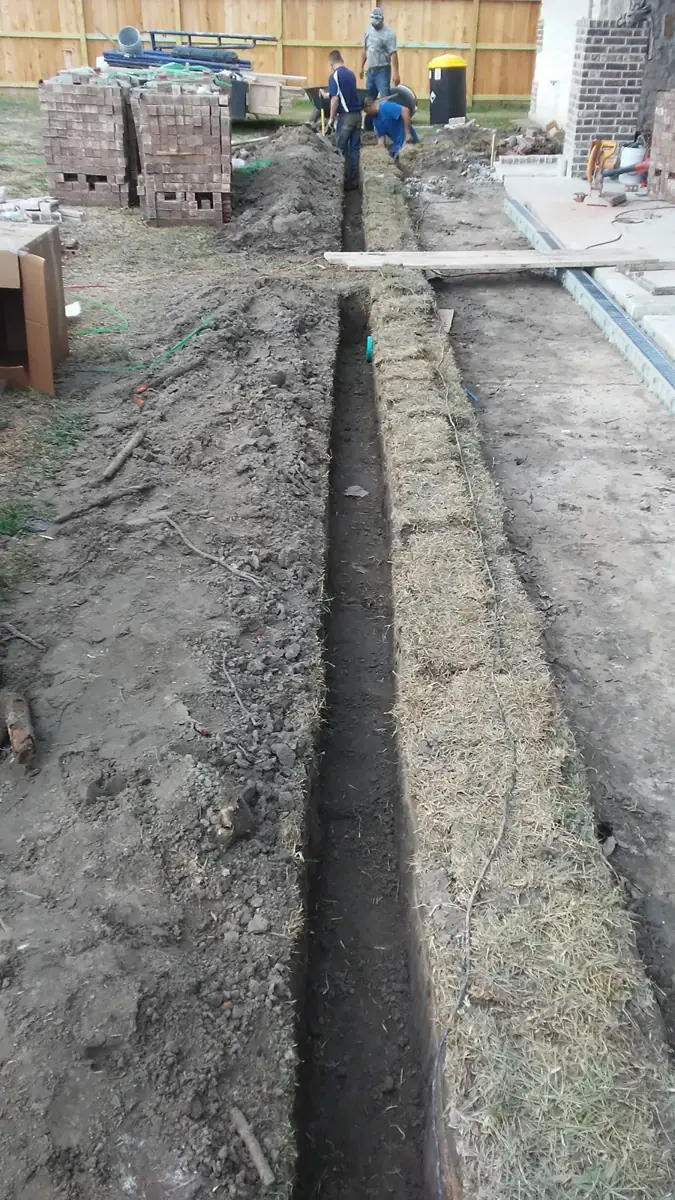
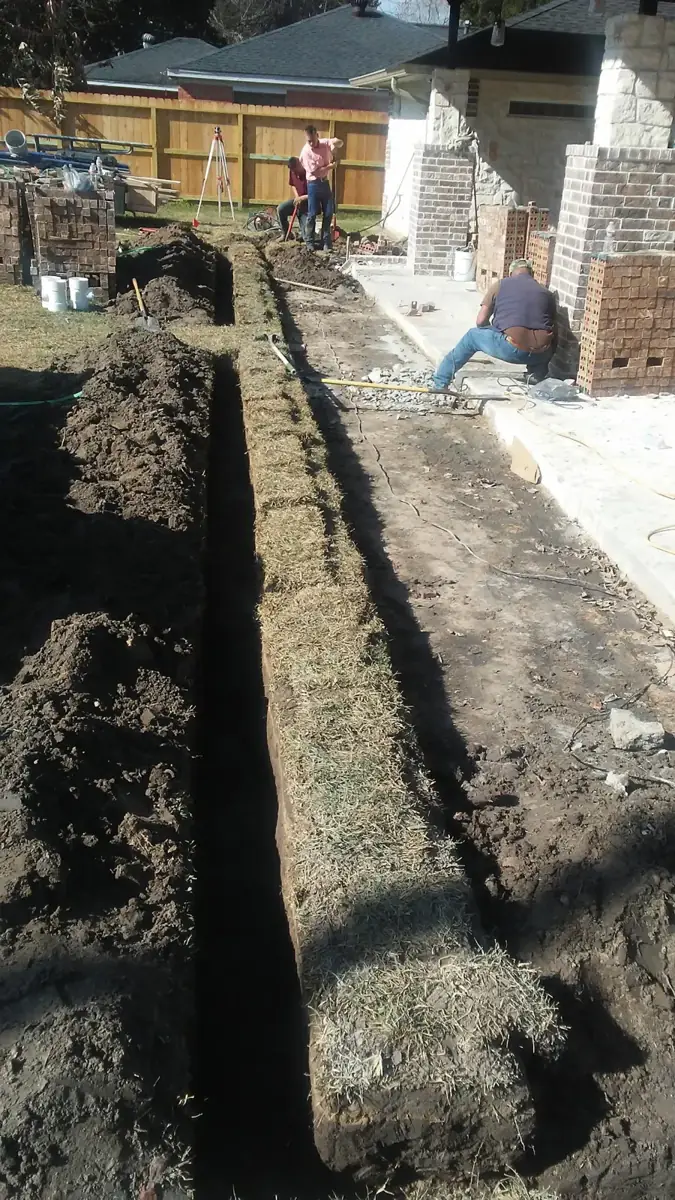
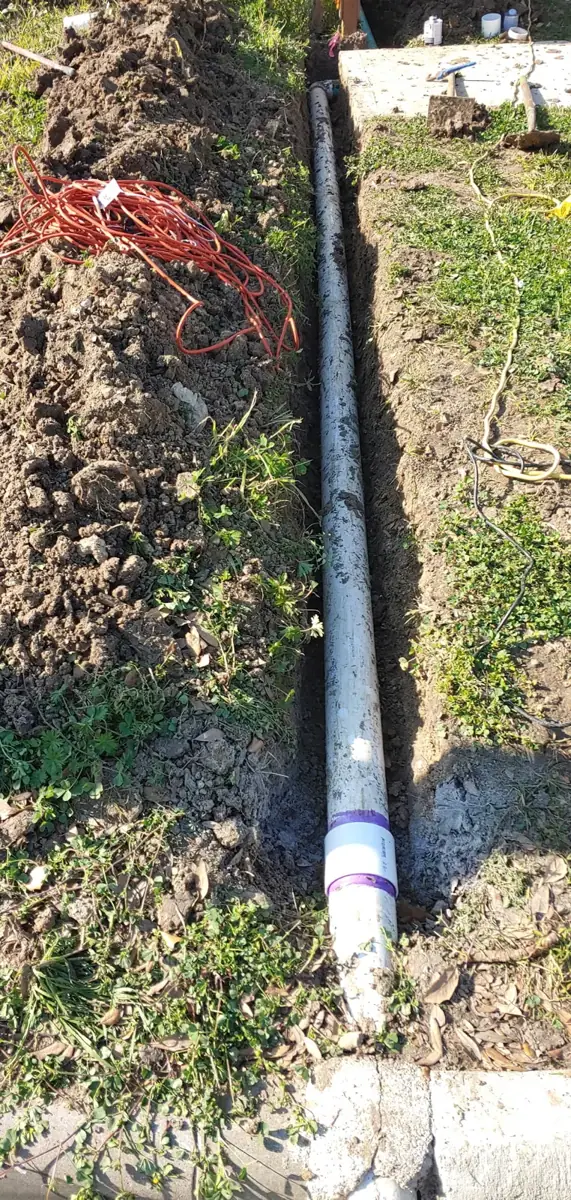
Photos show drainage work in progress and are included for illustration only. They are general examples, not customer reviews.
Frequently asked questions
Is a French drain the same as a yard drain?
No. A yard drain or catch basin is a grated inlet that collects surface water. A French drain is a gravel trench with perforated pipe that collects water from saturated soil. Many projects use both.
Why did my French drain stop working?
Common reasons are a clogged or buried outlet, silt in the gravel or pipe, a pipe that lost its slope, or a drain that was installed for the wrong kind of water. See French drain not working.
Can a French drain go next to my foundation?
Sometimes, but foundation work needs care. A professional should check grading, roof runoff and the foundation type first, because moving water close to a slab or pier-and-beam foundation can have side effects.
This page is educational and does not replace an onsite evaluation. Conditions, codes and HOA rules vary by property.